
If you have been following the news lately, you’ll be well aware of the catastrophes of climate change. Climate change is no longer limited to prime time news and the topic is a part of conversations all around us. Facebook and Instagram feeds keep you updated with the dangers of rising temperatures, disappearing species, and melting glaciers, and yet the planet is grappling with the reality of soon coming to an end.
We all know the ill affects of climate change and the problems that come with every plastic item we buy and every drop of water we don’t use optimally so we are not going to guilt you by listing the things that are going wrong or scare you with everything that is a probable cause of worry for the planet at this point. We all know the importance of fixing a broken tap, switching off the lights, powering off all appliances when not in use, and that the food we waste will probably end up in a land fill! The question is why do we do it anyway?
Your heart in the right place but the fact that humans are surrounded by products and lifestyles that make it impossible to live a fully sustainable life often comes in the way. The food industry invents a new diet fad every day. Some days you are running to the meat section to buff up for a Keto diet, other days you are going vegan in your pursuit to be healthy. It is always an extreme and either way, these diets raise the demand of particular food items that ultimately end up damaging the planet in some way or the other.
In our attempt to understand why we are still struggling to keep our planet alive, we found some evidence of studies that suggest that humans don’t work well under fear but are a lot more enthused with competition. This makes a lot of sense as most corporate businesses are driven by this rule and lets agree on how well that seems to work for them!
We need to change the way we talk about climate change.
Per Espen Stoknes, a Norwegian psychologist and climate change crusader, explains that the media attention and alarming statistics surrounding the topic makes us fearful. As humans we have a tendency to escape our fears rather than facing them. This fear makes us steer clear of any conversation on the issue. Stoknes points out how many of us suffer from ‘apocalypse fatigue’ and have immunized ourselves to the disaster inducing banter from media houses and magazines.
Feeling guilty or fearful brings withdrawal symptoms in people and makes them passive. Many reports suggest that about 50% Americans don’t think climate change will directly affect their generation. The issue is thought to be problematic only in the distant future, or for third world countries. ‘Climate change is for the polar bears and melting ice caps, but nothing is going to happen to me!’ This state of denial is indeed dangerous for our planet. But we don’t want to scare you away! Instead, we found out how organizations are trying to counter this aspect of human psychology to save the planet.
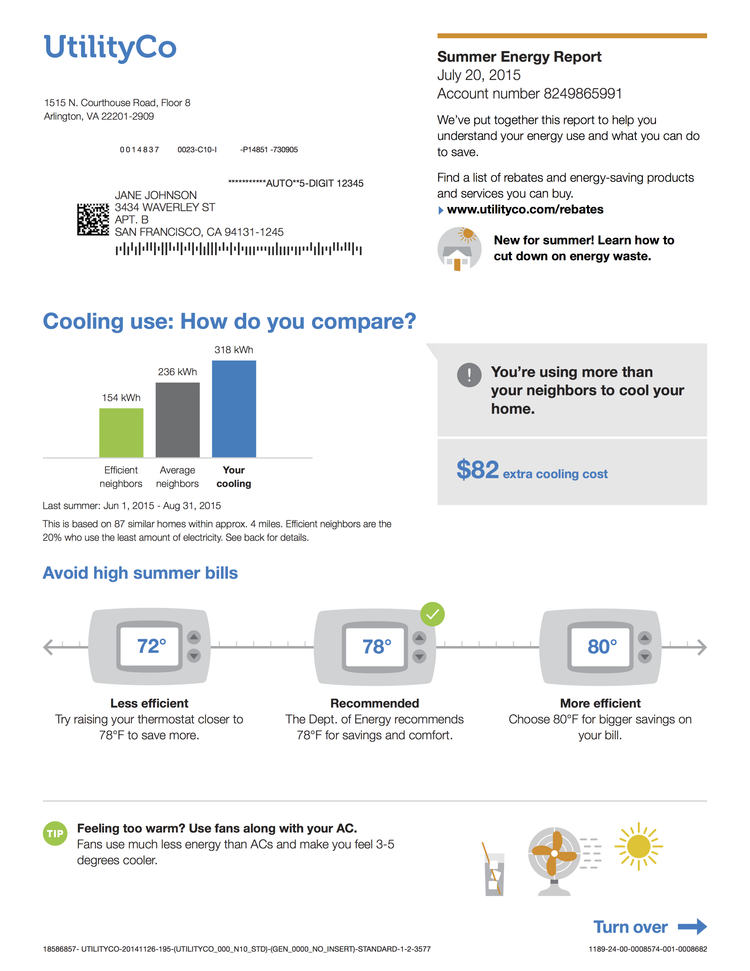
Opower, has a very interesting take on climate change. The company provides personalized reports on the consumption of energy. Opower has successfully leveraged the competitive streak in Americans and used it to bring down energy consumption in households. The company sends reports that not only show your household consumption but also your neighbors’ household consumption and the average energy consumption in your locality. In the race to be better ‘than thy neighbor’, people are willing to cut down on energy. Their reports also show energy consumption per season and a comparison to previous years. Added with some tips, tricks, and facts, the reports are educative and successful in making people finally act on climate change as opposed to passively reading about it.
In 2016, Virgin Atlantic gave their pilots personalized fuel consumption reports that led them to change the way they fly and adopt ways to reduce fuel consumption. The initiative coupled with performance incentives, reduced carbon dioxide emissions by 21,500 tons!
We do understand that humans have many social responsibilities, peer pressure, and competition to deal with at work, at home, even at that the gym trying to compete with that one person who just doesn’t seem to get tired! But these small social jabs on the topic of the environment, seem to poke people the right way. We still have a long way to go and nobody knows if there will be a day when we can take things at face value and just enjoy a meal or use a product without thinking if it’s good for the planet.
We should remember nobody is perfect!
It’s not about what you’re doing wrong, but what you’re doing right. Give yourself a pat on the back every time you remember to turn off an appliance, or use the subway instead of driving. Celebrate these small wins and share them with your friends, families, and neighbors. Let them learn from you, a little competition doesn’t hurt anyone! Remember that every little contribution is helping the Earth in a big way.


